
.webp)




Which Sugar Should You Choose for Perfect Homemade Jam? The Complete Guide
Choosing the right sugar is essential for making great jam: it affects texture, preservation and, above all, how the fruit’s natural flavours come through. White granulated sugar, brown sugar, jam sugar or honey each have their own benefits depending on the fruit’s pectin content and acidity. Discover which sugar to choose, the right fruit-to-sugar ratios, and La Chambre’s tips for achieving perfectly balanced homemade jam.
Ingredients
Which Sugar Should You Choose for Perfect Homemade Jam?
Instructions
The choice of sugar can make all the difference in a jam: its texture, how well it keeps over time, and above all, how the natural flavour of the fruit comes through. White sugar, brown sugar, jam sugar or honey: each has a specific role depending on the pectin content and acidity of the fruit you are using.
Here is our fruit-by-fruit guide to choosing the right sugar and the right proportions, based on the principles we use in our own kitchen at La Chambre.
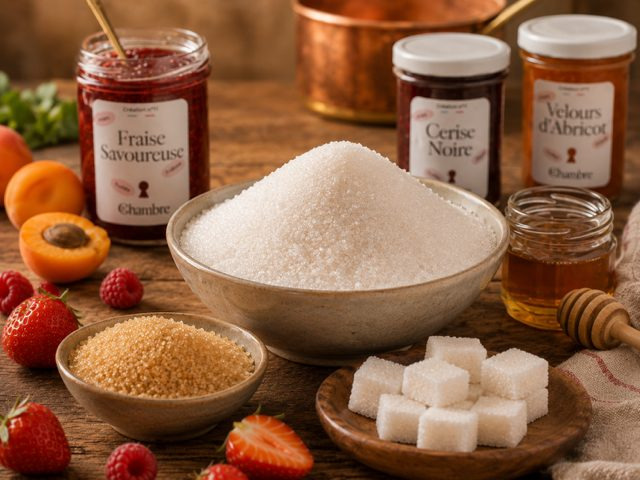
The 4 Types of Sugar You Can Use for Jam, and When to Choose Them
| Type of sugar | When to use it | Effect on the result |
|---|---|---|
| White granulated sugar | The standard choice for most fruits | Dissolves gradually, does not overpower the flavour of the fruit and provides good preservation. |
| Brown sugar / cane sugar | For fruits that pair well with warmer, richer notes, such as mirabelle plums, pears or apples | Adds subtle caramel notes and can slightly darken a light-coloured jam. |
| Jam sugar (with added pectin) | For fruits that are low in pectin, such as strawberries, cherries or apricots, or when you want to speed up the process | Usually contains added pectin and citric acid, allowing for a shorter cooking time and making it easier for the jam to set. |
| Honey | As a partial replacement for sugar, to add floral notes | Has a higher sweetening power, so less is needed. The flavour of the honey will also complement or sometimes compete with the flavour of the fruit. |
Which Sugar Should You Choose According to the Fruit’s Pectin Content?
The pectin content of the fruit (see our dedicated article: “Pectin Content in Fruit”) directly influences the fruit-to-sugar ratio you can use.
Fruits High in Pectin
Quinces, redcurrants, citrus fruits and apples are naturally high in pectin. As a general reference, you can use a ratio of 1 part fruit to 1 part sugar.
These include some of the fruits featured in our Citrus Jams.
Fruits with a Medium Pectin Content
Apricots and raspberries contain moderate levels of pectin. Depending on the fruit and recipe, around 55 to 60% sugar can be used.
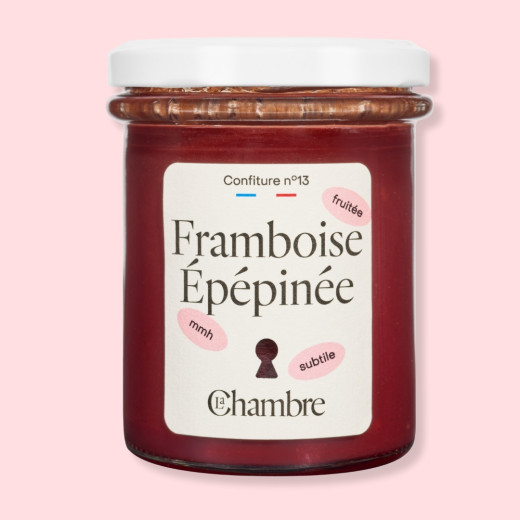
This is the case with our Apricot Passion Fruit Redcurrant Jam and our Royal Raspberry Jam.
Fruits Low in Pectin
Strawberries, cherries, pears and figs are naturally low in pectin. In this case, you can use jam sugar or add lemon juice to help the jam set.
Around 35% sugar can allow more of the fruit’s natural character to shine through, provided that the recipe, cooking process and preservation method are adjusted accordingly. This is the approach used for our Delicious Strawberry Jam and our Cherry Thé du Hammam Jam.
Can You Reduce the Amount of Sugar Without Ruining Your Jam?
Yes, but not without making other adjustments. Sugar does more than simply add sweetness: together with pectin, it contributes to the setting process and also plays an important role in preserving the jam.
Reducing the amount of sugar without changing anything else often results in a runnier jam with a shorter shelf life.
One of the simplest ways to compensate is to add a little lemon juice, which can help the jam set even when less sugar is used. To learn more, read our article “Why Add Lemon Juice to Jam?”.
Frequently Asked Questions About Sugar in Jam
What Is the Best Sugar for Making Jam?
White granulated sugar remains the safest and most neutral choice in terms of flavour. Jam sugar becomes particularly useful when working with fruits that are naturally low in pectin, such as strawberries or cherries.
Can You Replace Sugar with Honey in Jam?
Yes, partially. Honey has a higher sweetening power than regular sugar, so you can generally use less. However, its distinctive flavour will also influence the taste of the fruit. It is particularly well suited to fruits with strong flavours, such as mirabelle plums, pears or apricots.
Why Isn’t My Jam Setting Even Though I Used the Right Amount of Sugar?
Most often, the problem is a lack of pectin or acidity. With fruits that are naturally low in pectin, such as strawberries, cherries or pears, sugar alone may not be enough to achieve the desired texture. You may need to add lemon juice, another source of pectin or use jam sugar.
Is Jam Sugar Essential?
No. However, it can make the process much easier when working with fruits that are low in pectin, as it avoids having to add pectin and citric acid separately.
Discover La Chambre’s Artisan Jams
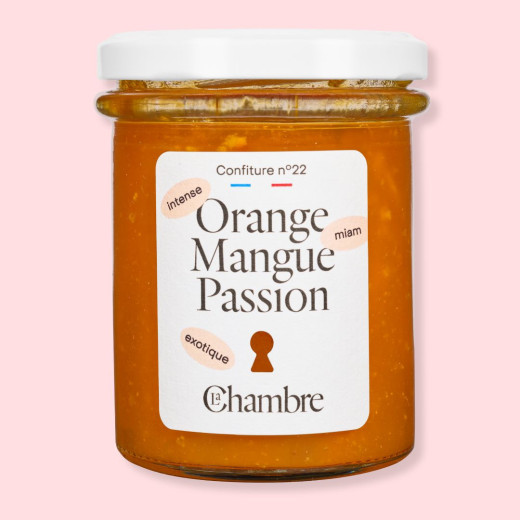
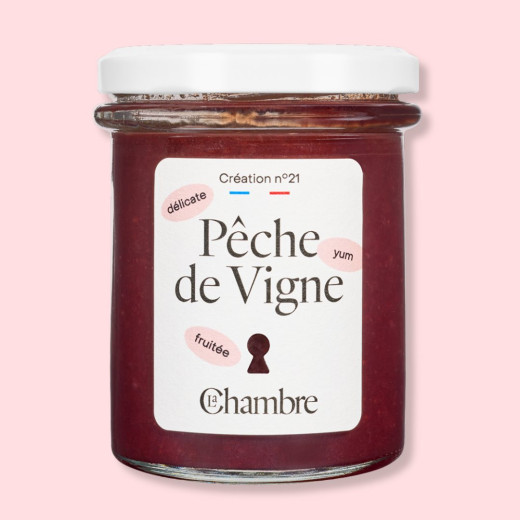
Discover our artisan jams, cooked in copper pans with just the right amount of sugar to reveal the unique flavour and character of each fruit.
To pair with this recipe
- New
- New
- New